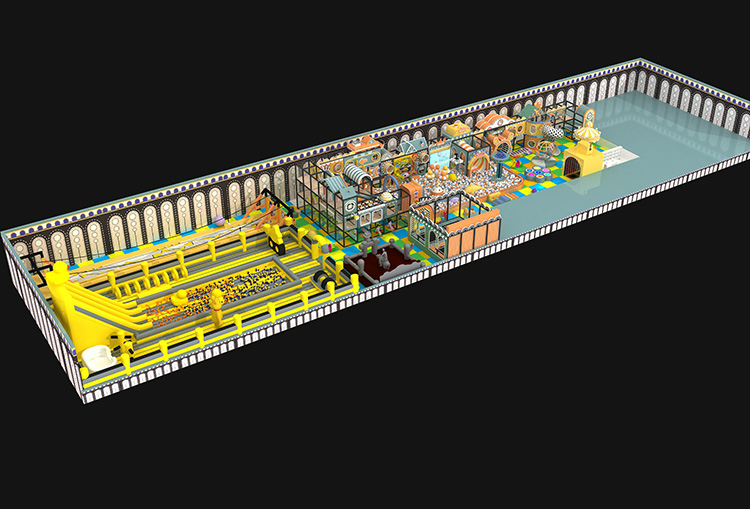
A Complete Guide to Purchasing Indoor Playground Equipment and a List of Pitfalls to Avoid
Opening an indoor children's playground in 2026 is an exciting entrepreneurial venture, driven by steady family demand and the growing focus on children's physical and cognitive development. However, success hinges on smart equipment purchasing—the single largest investment and a critical factor in safety, customer satisfaction, and long-term profitability. This guide, built on industry expertise, 2026 standards, and real-world operational experience, delivers a comprehensive, EEAT-compliant resource to help you buy the right equipment and avoid costly mistakes.
Why Equipment Purchasing Is Make-or-Break for Your 2026 Playground
Indoor playground equipment represents 40–60% of your total startup investment. Cheap, low-quality gear leads to frequent breakdowns, safety risks, negative reviews, and shortened lifespans—all of which destroy your ROI. Premium, compliant equipment, while pricier upfront, reduces downtime, lowers maintenance costs, and builds trust with parents. In 2026, with stricter safety regulations and more discerning consumers, cutting corners on equipment is no longer an option.
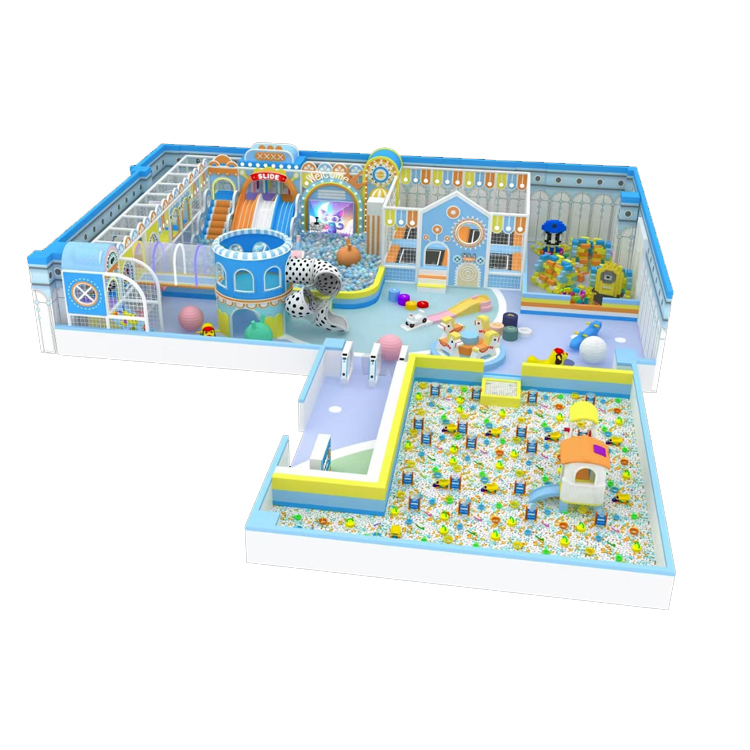
Chapter 1: Core Factors for 2026 Indoor Playground Equipment Purchasing
1.1 Safety & Compliance (Non-Negotiable)
Safety is the foundation of your playground. In 2026, global and regional standards are more rigorous than ever—non-compliance leads to fines, closures, and legal liability.
Key 2026 Safety Standards:
International: EN 1176 (playground equipment), EN 1177 (impact-absorbing surfaces), ASTM F1487 (US public playgrounds), ASTM F963 (toy safety)
China: GB/T 39222-2020 (general safety), GB/T 27689-2026 (children's slides), GB 8408-2018 (safety code for amusement facilities)
Chemicals: REACH (EU), California Prop 65, E0/E1 low-formaldehyde materials
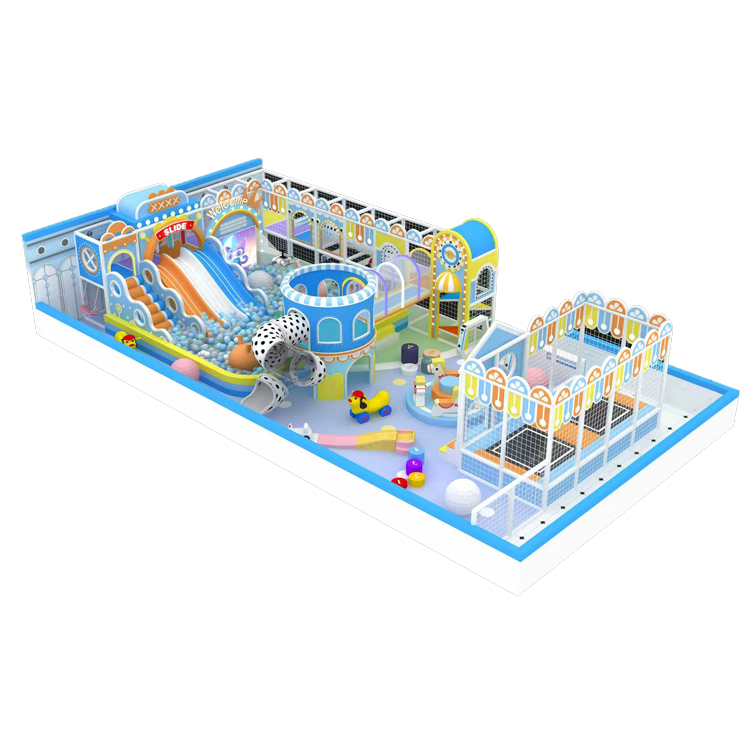
Critical Safety Features:
All edges rounded (≥3cm soft padding) to prevent injuries
Non-toxic, food-grade PVC/PE plastics and high-density foam
Protective railings (height ≥0.9m, spacing ≤110mm) for elevated platforms
Impact-absorbing flooring (EVA, rubber, or artificial turf) with buffer coefficient ≥0.7
Marine-grade 304 stainless steel for metal components (rust-resistant)
Verification Step: Always demand third-party test reports, certification documents, and product liability insurance from suppliers.
1.2 Space & Age Group Matching
Equipment must fit your venue and target age range—poor matching wastes space and reduces appeal.
Venue Assessment Checklist:
Total square footage (e.g., 500 sq ft = small toddler zone; 1,200–1,800 sq ft = mid-sized; 3,000+ sq ft = large family entertainment center)
Ceiling height (minimum 2.5m for soft play; ≥3.5m for slides/climbing structures)
Column layout, door positions, and traffic flow
Age-Appropriate Equipment (2026 Trends):
Toddlers (0–3): Soft play blocks, ball pits (7cm+ balls to prevent choking), low slides, sensory panels
Preschoolers (3–6): Modular play structures, small climbing frames, interactive walls, role-play areas
School-Age (6–12): Rope climbs, obstacle courses, trampolines, slides, ball pools with interactive projections