How to Design a Non-Powered Playground? A Comprehensive Guide to Site Planning, Costs, and Implementation
When developing scenic spots, agritourism farms, or campsites, many operators consider adding a non-powered amusement park. These parks feature equipment that requires no electricity and offer flexible activity options suitable for both children and adults; furthermore, many of the trending attractions naturally generate buzz on social media through photo and short-video sharing.
However, creating a non-powered park involves more than just buying a collection of equipment and placing it on the site. Without proper initial design, operators often face issues later on—such as
unengaging attractions, chaotic visitor flow, and wasted space. So, how exactly should a non-powered amusement park be designed?
1.Assess the site first, then decide on the equipment.
The first step in designing a non-powered amusement park is to assess the site.
How large is the area? Is the terrain flat or hilly? Where is the entrance located? Are there existing trees, ponds, or slopes? All these factors influence the layout of the equipment.
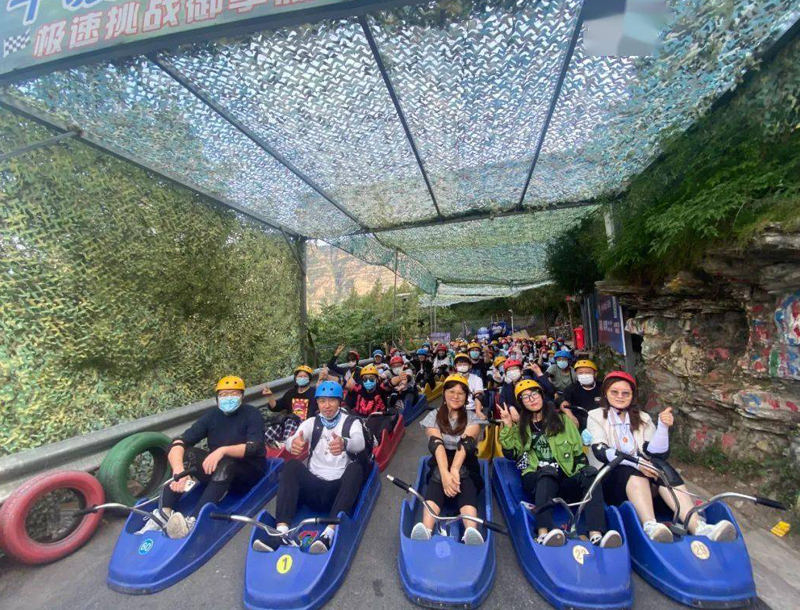
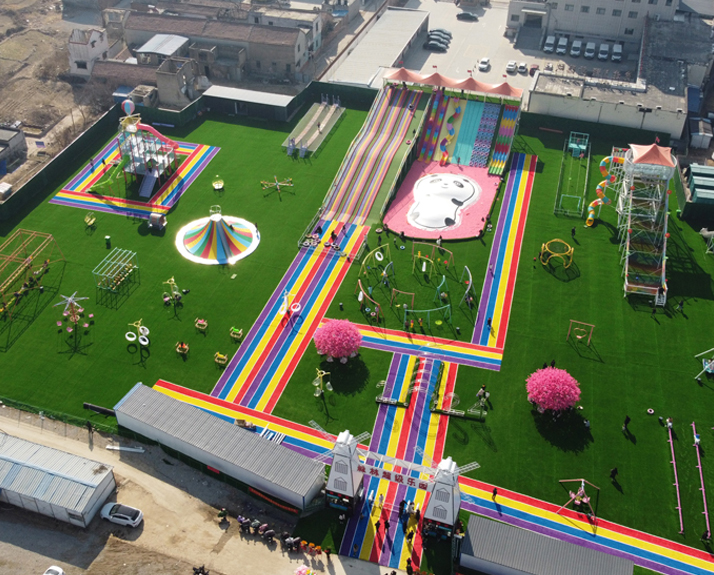
For instance, on hilly terrain, you can utilize the natural landscape to incorporate features like rainbow slides, climbing structures, zip lines, and aerial walkways; conversely, for a farm or flat site, options such as slides, swings, trampolines, sand pits, and climbing nets are more suitable.
Therefore, rather than simply buying whatever equipment happens to be trending, it is best to plan the site layout first and then select the equipment based on the specific characteristics of the
location.
2.Do not stack equipment haphazardly; organize it by designated areas.
A non-motorized amusement park can be broadly divided into several zones.
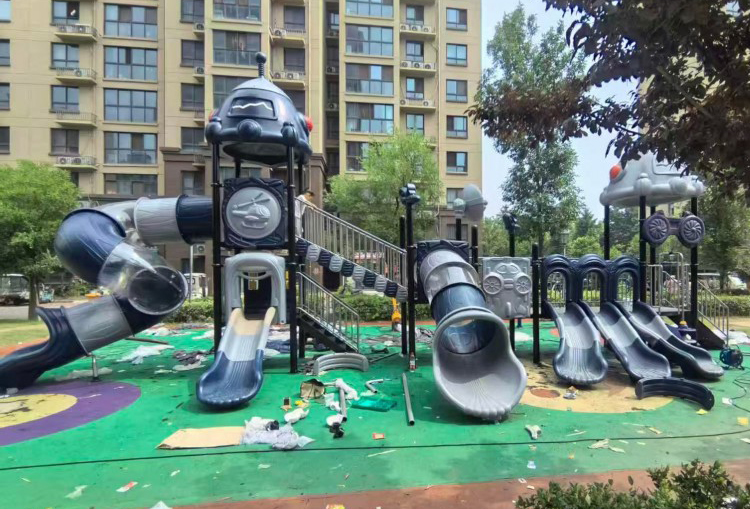
The area for younger children can feature small slides, swings, spring riders, and sandpits; a family-friendly zone might include parent-child swings, trampolines, and climbing equipment to encourage adult participation.
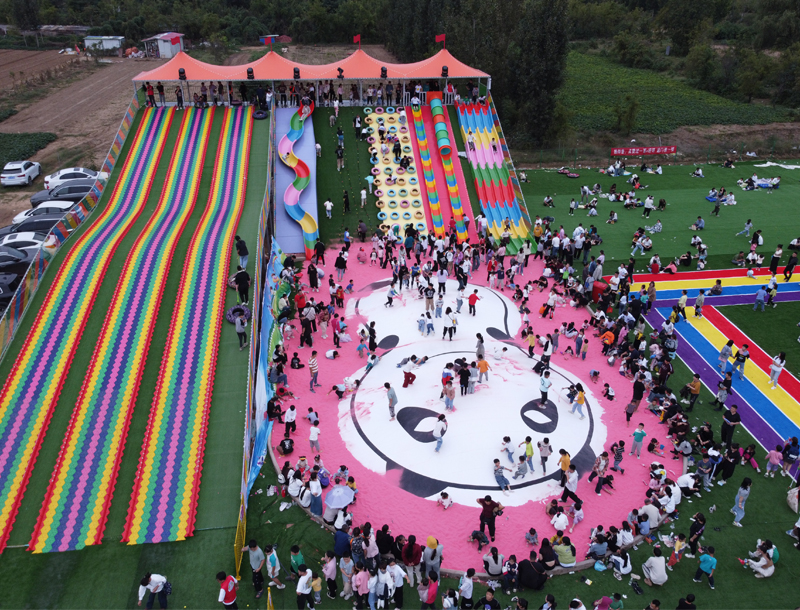
If the site is spacious enough, attractions such as rainbow slides, "viral" swings, rock climbing walls, ziplines, and aerial walkways can be added to provide thrills for older children and young adults.
Additionally, it is advisable to include one or two distinctive, Instagram-worthy attractions—such as a "wish tree," a moon-shaped swing, or large-scale installations based on popular characters. When visitors take photos to share on social media or in short videos, it serves as organic promotion for the park.
3.How much does it cost to build a non-powered playground?
There is no single, fixed answer to this question.
Prices naturally vary depending on the size of the venue and the quantity of equipment involved. For a small-scale family entertainment center covering a few hundred square meters, you do not need a vast amount of equipment; the focus should be on executing a few core attractions well. In contrast, for large-scale projects spanning thousands or even tens of thousands of square meters, costs will rise due to factors such as equipment, infrastructure construction, transportation, installation, and landscaping.
Therefore, it is not advisable to simply ask "how much does it cost per square meter" right from the start, as this method of calculation is inaccurate.
A more reliable approach is to first determine the venue size and your budget, and then have the manufacturer select and configure the equipment to fit that budget; this makes it much easier to control costs.
4. Don't Focus Solely on Aesthetics During Design
Many business owners developing non-powered playgrounds focus only on whether the equipment looks attractive; in reality, how visitors actually interact with and enjoy the facilities is far more important.
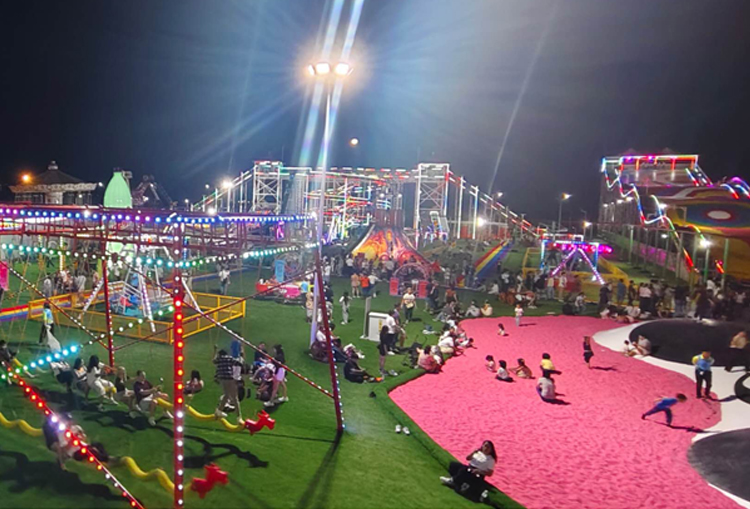
It is best to place eye-catching attractions near the entrance so visitors see them immediately upon arrival. The core play area should be situated further inside, surrounded by supporting facilities such as rest areas, restrooms, and dining options.
Equipment should not be packed too closely together; sufficient space must be left for movement and safety.
For outdoor attractions, factors such as drainage, sun protection, corrosion resistance, and local weather conditions must be taken into account. This is particularly crucial for projects located in mountainous areas, where the terrain and construction conditions must be thoroughly assessed in advance.
5. Partnering with a Manufacturer Saves You a Lot of Hassle
Sourcing equipment piecemeal from various suppliers often leads to a lack of stylistic cohesion and can cause issues with dimensions, shipping, and installation.
By working with a professional manufacturer for your non-powered playground project, you benefit from a streamlined process that covers everything: site surveying; planning based on your available space, budget, and operational goals; rendering designs; equipment manufacturing; and finally, shipping and installation.
Zhengzhou Huajin Amusement Equipment Co., Ltd. is a professional manufacturer specializing in amusement equipment. We provide comprehensive services—including design, customization, production, shipping, and installation—tailored to diverse venues such as scenic areas, agritourism farms, campsites, and rural tourism destinations.
Ultimately, the key to designing a non-powered playground isn't simply maximizing the amount of equipment, but rather creating a balanced layout that suits the specific site. Assess the site before finalizing the plan, and determine your budget before selecting the equipment. This approach results in a playground that is not only fun and visually appealing but also easier to manage and operate in the long run.